What Is Embroidery Digitizing?

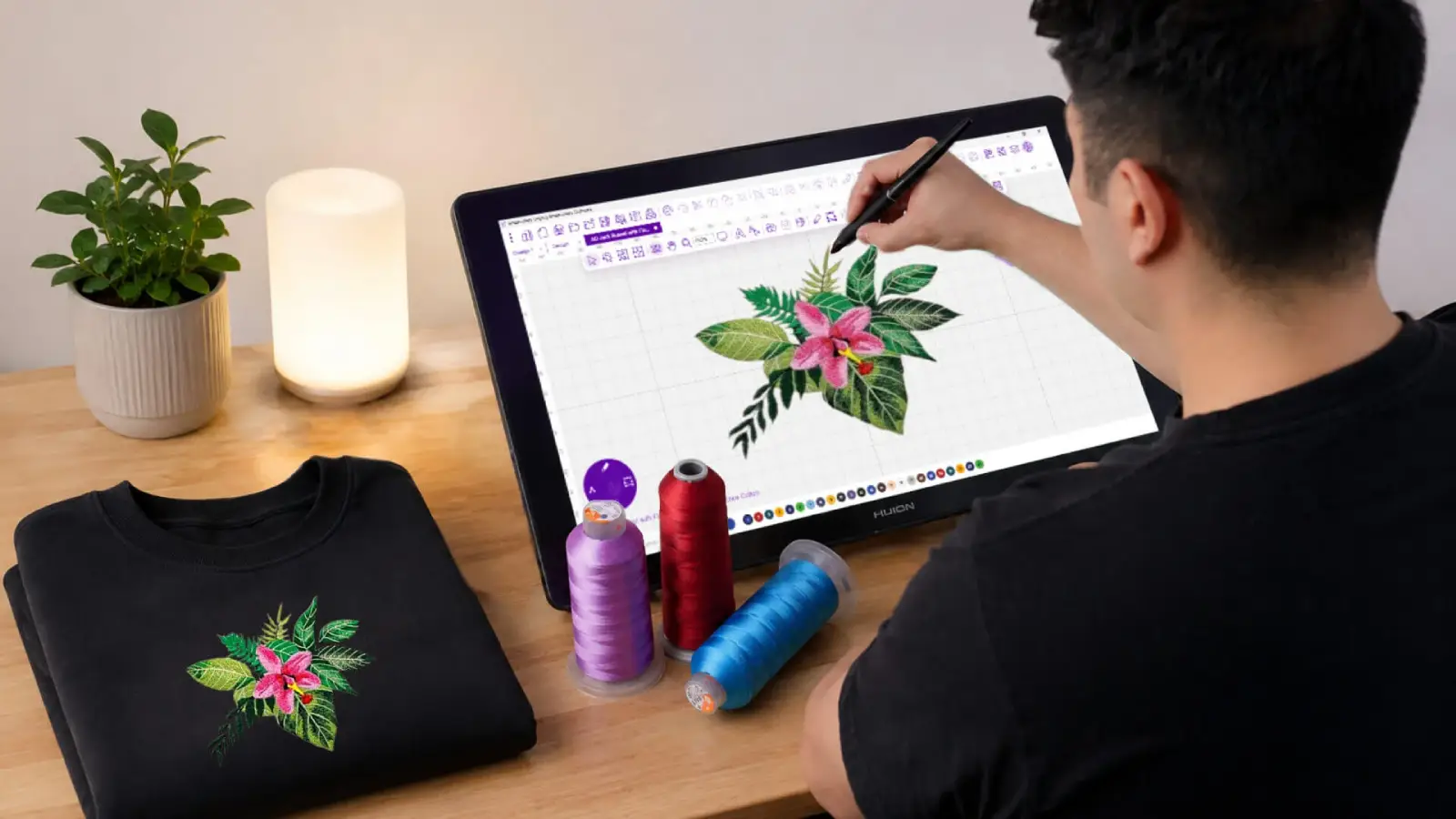
Embroidery digitizing is the process of converting a logo, image, or artwork into a digital embroidery file that an embroidery machine can read. The digitized file tells the machine where to place each stitch, which stitch type to use, and how the design should be stitched on fabric.
A good embroidery design is not created by simply converting an image into a file. It requires careful planning of stitch types, stitch direction, density, underlay, and thread sequence. Professional embroidery digitizing helps make the final design clean, detailed, and suitable for different types of garments and fabrics.
How Does Embroidery Digitizing Work?
The digitizing process starts with the original artwork or logo. A digitizer studies the design and decides how each part should be created with stitches.
The artwork is then converted into an embroidery file using specialized digitizing software. Different areas of the design may use different stitch types depending on their size, shape, and level of detail.
The main steps usually include:
- Reviewing the original artwork
- Creating the design structure
- Selecting suitable stitch types
- Setting stitch direction
- Adjusting stitch density
- Adding underlay stitches
- Setting the correct thread sequence
- Checking the design for possible problems
- Testing and making adjustments when needed
Why Is Professional Digitizing Important?
The quality of the digitized file has a direct effect on the final embroidery. Poor digitizing can cause problems such as uneven stitching, gaps, excessive thread, poor detail, or fabric distortion.
Professional digitizing focuses on how the design will actually be embroidered. This means the digitizer considers the fabric, design size, stitch count, thread, and embroidery machine before preparing the final file.
A professionally digitized logo can help create a cleaner and more consistent result on products such as shirts, jackets, caps, uniforms, bags, and other fabric items.
Common Stitch Types in Embroidery Digitizing
Different stitch types are used for different parts of an embroidery design.
Satin Stitch
Satin stitches are often used for borders, lettering, and narrow shapes. They can create a smooth and clean appearance when used correctly.
Fill Stitch
Fill stitches are useful for covering larger areas of a design. The stitch direction and density need to be planned carefully for a balanced result.
Running Stitch
Running stitches are commonly used for thin lines, outlines, and small details where a heavier stitch is not suitable.
What Makes a Good Embroidery Digitized File?
A good digitized file should be created according to the actual embroidery requirements. Important factors include:
- Correct stitch direction
- Suitable stitch density
- Proper underlay
- Clean stitch sequence
- Appropriate stitch types
- Good handling of small details
- Suitable design size
- Consideration of the fabric type
The goal is not simply to create a file. The goal is to create a file that produces a good embroidery result when it is stitched.
Which Designs Can Be Digitized?
Many types of artwork can be converted into embroidery designs, including:
- Business logos
- Brand names
- Custom artwork
- Text and lettering
- Team logos
- Uniform designs
- Cap designs
- Patch designs
- Promotional designs
Very detailed artwork may need to be simplified before digitizing because embroidery has physical limits that are different from digital images.
What Embroidery File Formats Are Used?
Different embroidery machines use different file formats. Common formats include DST, PES, EXP, JEF, and VP3.
The required format depends on the embroidery machine being used. Before ordering a digitized design, it is important to know which file format your machine supports.
Embroidery Digitizing for Businesses
Businesses often use embroidery to add logos and branding to uniforms, workwear, caps, jackets, bags, and other products.
A professionally digitized logo can help maintain a consistent appearance across different embroidered products. The design may also need adjustments when it is used at different sizes or on different fabrics.
Final Thoughts
Embroidery digitizing is an important step between artwork and the final embroidered product. A high-quality digital file helps an embroidery machine understand how the design should be stitched.
Whether you need a business logo, custom artwork, lettering, or an embroidery patch, professional digitizing can help turn your artwork into a machine-ready embroidery design.
Need professional embroidery digitizing? Contact Advance Digitizing to discuss your design requirements and get your artwork prepared for embroidery.